


Somatic practices bring attention to bodily sensations, contact, breath, and movement. These ten low-pressure options can help you pause during everyday stress without promising to release trauma or reset your nervous system. They are self-guided grounding practices, not a replacement for therapy. Looking toward 2027, the useful shift is from chasing a perfect technique to choosing a small action that feels safe and repeatable.
Key takeaways
- Start with what feels neutral or manageable, not the most intense sensation.
- Try one practice for a minute or two, then notice whether it helps.
- There is no universal best method, and you can stop or switch at any time.
- Persistent or overwhelming symptoms deserve qualified professional support.
Ten gentle practices to try
Somatic work can be as simple as noticing how your body meets the room. Choose one exercise, keep your eyes open if that feels better, and avoid forcing deep breaths, stretches, or emotional reactions.
1. Let your eyes orient to the room
Slowly look around and name three ordinary things you see, such as a lamp, a doorway, or a cup. Let your gaze rest on each one for a moment. This outward focus can offer an alternative to concentrating on internal sensations when that feels uncomfortable.
2. Notice where your body is supported
Feel the chair beneath you, your back against a cushion, or your feet touching the floor. Notice pressure and support without trying to change your posture. If focusing inward feels unsettling, name a few visible objects instead.
3. Shift your weight gently
While standing near a stable surface, move a small amount of weight from one foot to the other. Keep the movement slow and comfortable. You are not looking for a stretch or a dramatic sensation, just noticing the change in balance.
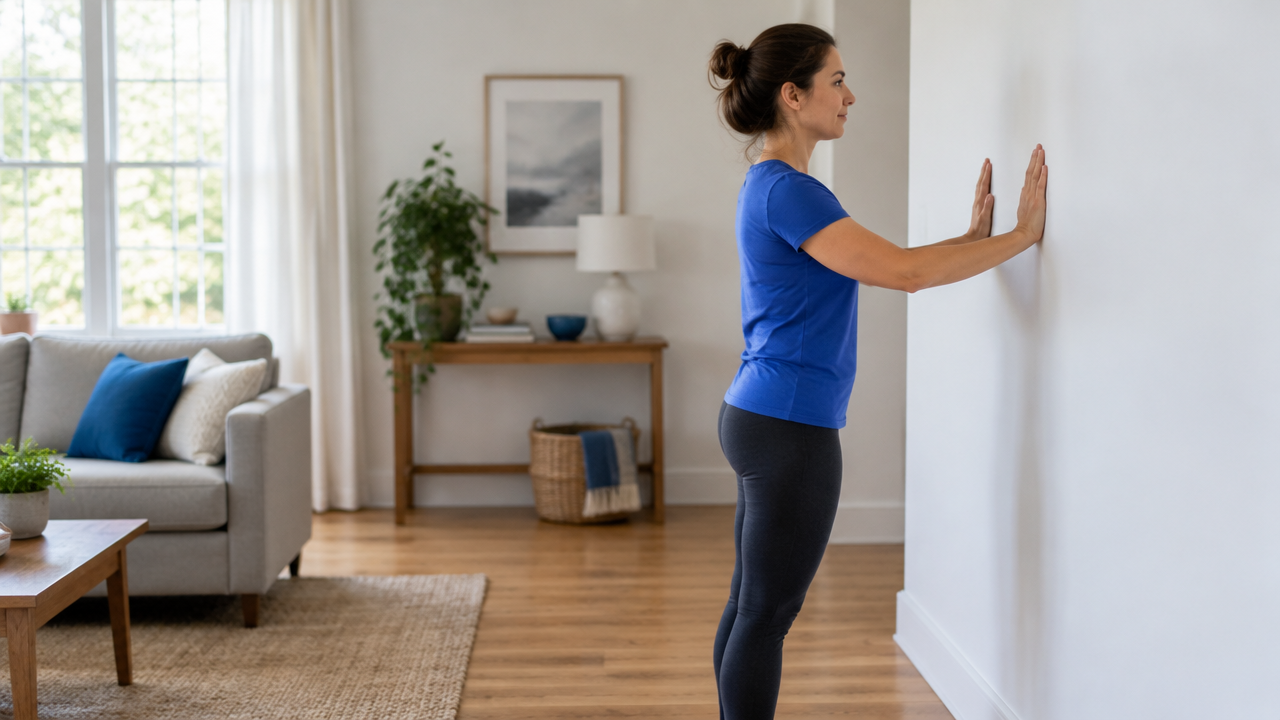
4. Press your palms into a wall
Stand facing a wall and place your palms against it at chest height. Press gently for a few seconds, then ease off and notice your hands and feet. Keep the effort light, and stop if you feel pain or dizziness.
5. Offer yourself steady hand contact
If touch feels welcome, rest one hand over the other or place a hand on your forearm. Notice the warmth or pressure. This is optional: keep your hands beside you or hold a familiar object if self-touch does not feel comfortable.
6. Make one small shoulder or jaw movement
Try a gentle shoulder roll or let your jaw unclench slightly. Move within a comfortable range and pause before repeating. The point is not to stretch out all tension, but to notice how a small change feels.
7. Hum softly on a comfortable breath
Try a quiet hum for a few seconds if sound feels soothing and your breathing stays easy. You can stop at any time. Treat it as a simple sensory activity, not a guaranteed way to stimulate a nerve or change your stress hormones.
8. Allow an easy, unforced exhale
Notice one ordinary breath, then let the next exhale last only as long as feels comfortable. Do not hold your breath or chase a fixed count. A randomized slow-breathing trial found that breathing practice helped participants’ psychological stress, but a longer exhale did not outperform an equal inhale-to-exhale ratio.
9. Scan for a neutral sensation
Instead of searching for pain or tension, notice something neutral: the temperature of your hands, the feel of fabric, or your feet inside your shoes. A 2024 multisite study of 2,239 participants found that brief self-administered mindfulness exercises, including a body scan, reduced short-term self-reported stress compared with an active control. That result does not mean every scan suits everyone.
10. Move attention between neutral and mildly tense areas
If it feels manageable, notice a neutral area, then briefly notice a mildly tense area, and return to neutral. Keep the sensations small and the pace slow. Skip this exercise if focusing on discomfort increases distress; it is not trauma processing.
How can you make these practices safer and more useful?
Keep the practice brief and track what actually happens for you. Before and after, ask: “Do I feel the same, a little steadier, or more unsettled?” You do not need to feel calm for the practice to count, and stopping is a valid response.
- Choose one exercise rather than combining all ten.
- Use a chair, wall, or open eyes if these help you feel oriented.
- Stop if you notice pain, dizziness, panic, or a rise in distress.
- Talk with a health professional about persistent symptoms or a health condition.
The NIH’s overview of relaxation techniques notes that these approaches are generally safe but that evidence for specific health conditions is limited. A practice can be a useful coping tool without being a cure or a substitute for care.
Frequently asked questions
What counts as somatic movement?
Somatic movement is gentle movement practiced with attention to physical sensations, effort, balance, or contact with the ground. It may include shifting your weight, pressing your hands against a wall, or noticing your breath. The aim is to observe and respond to your body, not to force a particular emotional release.
Can you practice somatic therapy on yourself?
You can try gentle body-awareness and grounding exercises on your own, such as noticing your feet or making small, comfortable movements. These are self-guided practices, not a substitute for somatic therapy or mental health care. Stop if a practice increases distress, and seek professional support if stress or trauma symptoms persist.
What is the most effective somatic technique?
There is no single somatic technique that works best for everyone. A brief body scan, steady contact with the floor, or gentle movement may feel useful, while inward attention can feel uncomfortable for some people. Choose a simple practice that feels manageable, and judge it by whether it helps you feel more settled afterward.
What are signs your body is releasing trauma?
There is no reliable set of signs that proves trauma is leaving the body. Shaking, tears, warmth, or tiredness can have many causes and do not confirm that trauma has been released. If a practice brings up strong distress, pause, reconnect with your surroundings, and consider support from a qualified clinician.
How do you release trapped trauma from the body?
Trauma is not literally trapped in a body part waiting to be released by one exercise. Gentle grounding or movement may support moment-to-moment coping, but it does not guarantee trauma recovery. If memories, panic, or other symptoms disrupt daily life, work with a licensed mental health professional trained in trauma-informed care.